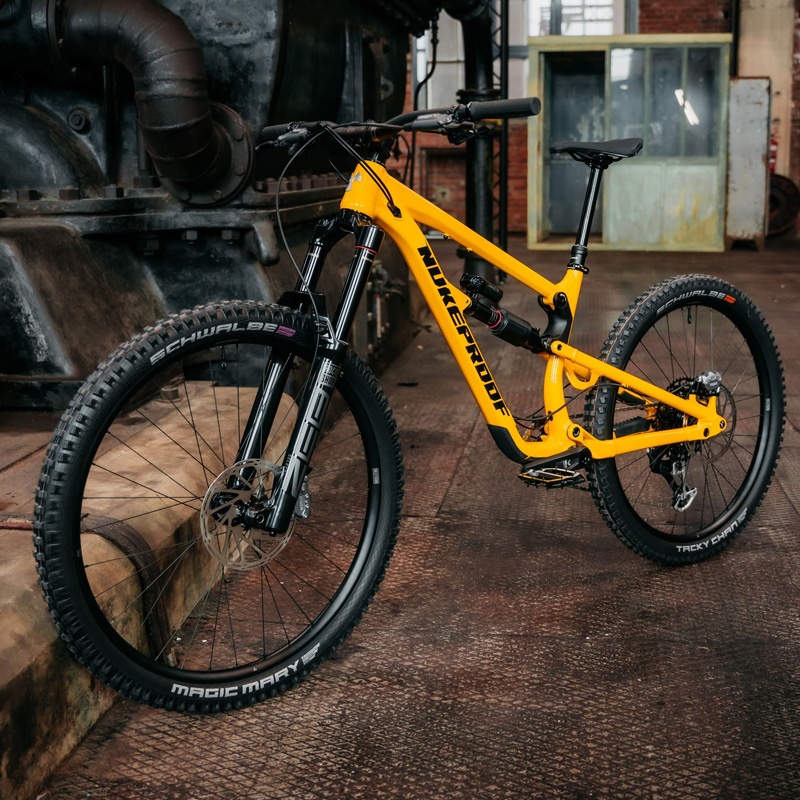
Anyone who regularly rides a mountain bike knows that maintenance is a part of life. Some find it relaxing, but everyone agrees: maintenance is essential. Especially if you often ride in wet, muddy conditions or tackle technical terrain. Many mountain bikers clean their bikes, lubricate the chain, and check for wear. That's a good foundation.
But at some point you realize: the bike still rides fine, but it feels less taut, less precise. It's the kind of signal many experienced riders recognize.
Maintenance is about how your mountain bike feels
For beginners, maintenance is primarily about preventing things from breaking down. For advanced riders, the focus shifts: it's increasingly about how your mountain bike responds in the moment. Is it still stable at speed? Does it still respond sharply in technical sections? Do you trust your brakes, grip, and suspension implicitly?
Even a technically well-tuned MTB can feel unpredictable or "strange." This is often due to a combination of small details:
- Switching that is just a little bit slower or less precise
- Brakes with a variable point of contact
- Bearings that rotate, but have lost their smoothness.
- A suspension that bounces back a little stiffer than before
Good maintenance keeps your bike predictable. And predictability means confidence, especially at speed, on descents, or on technical drops.
The drivetrain: looking beyond visible dirt
Cleaning and lubricating the chain is a basic routine. But for advanced riders, that's not enough. Wear on the chain, cassette, and chainrings occurs gradually, and if you only focus on visible damage, you're already too late.
Inside tips:
Use a chain checker and measure in time.
If you ride for too long with a worn chain, your cassette will wear out faster.
Avoid switching under load.
Don't shift under load. The extra tension on the chain and sprockets accelerates drivetrain wear.
Derailleur and mounting.
Check that the derailleur pulleys rotate smoothly and are free of burrs. Also make sure the teeth are sharp and not worn.
Watch for “ghost shifting” or skipping when powering on:
This is often a sign that your chain or cassette is just past its critical point of wear. Also check the derailleur hanger: it should be straight and perfectly aligned.
Suspension: the difference between work and optimal performance
If the suspension isn't leaking, everything seems fine. But damping and sensitivity gradually decrease. Dirty oil, collapsed air chambers, and dried-out seals cause your shocks and fork to become less active. You often only notice the difference when performance actually declines. Work actively with the SetUp; every trail requires different settings!
Inside tips:
Front fork service is necessary!
Have your fork and shock serviced by a specialist at least once a year (or more often with heavy use). Check that the sag is still correct; spring pressure changes slowly.
Listen for clicking sounds or slow rebound: signs that internal parts are dirty or worn.
Use a cloth with some fork and damper spray on your fork tubes after cleaning. “Use sparingly: a thin layer is sufficient.”
Well-functioning suspension provides peace and speed.
Braking: Trust lies in repetition
Powerful brakes are nice, but predictable braking is essential. If the engagement point slips, your lever moves deeper, or you have no feel for modulation, you'll lose control and confidence in your braking.
Inside tips:
Bleeding the brake line and replacing the oil
Bleed your brakes preventatively (e.g., every six months), even if you don't have any problems yet. Use disc cleaner (such as isopropyl) after muddy or wet rides. Check your brake levers for play (a small spring in the lever can wear out). Always use the same type of brake pads on every mountain bike (organic or sintered).
Confidence in your brakes creates flow on the trail and makes you faster.
Bearings: often forgotten, but important the silent resistance
Bearings rarely wear out all at once, and they gradually add more and more resistance without you noticing. The headset, bottom bracket, wheel hubs, and frame pivot bearings are often overlooked areas.
Inside tips:
Bearings - check the rotating parts of your MTB
Lift your bike and turn the handlebars. Do you feel a chafing or jerking sensation? Is it the headset bearing? Remove the wheels and rotate the axles: do you feel any play or chafing? Is the bottom bracket creaking? The cause is sometimes the bearings rather than the crank. Have the pivot bearings of full-suspension frames checked annually or replaced yourself.
Maintenance is part of your driving style
Mountain biking puts a lot of strain on your equipment. Wet weather, mud, drops, roots, steep off-cambers—it takes its toll. Anyone who takes themselves seriously as a mountain bikeralso takes care of their bike. With focused attention and expertise, without overdoing it.
Be aware of your bicycle
Mountain biking demands a lot from your equipment. Anyone who takes themselves seriously as a mountain biker also takes good care of their bike. With care and attention for your equipment, without excessive fuss.